
Generative Artificial Intelligence and the Future of Social Content: Opportunities and Challenges
Abstract
The world of social media content creation, dissemination, and consumption has been revolutionized by generative artificial intelligence (GenAI). This paper explores the diverse ways in which GenAI is influencing social content ecosystems by analyzing the findings from a systematic review of 85 academic and industry publications spanning from 2015 to 2026. The research draws from the fields of communication studies, human-computer interaction, information systems, and regulatory policy to pinpoint three opportunity domains and four challenge clusters: creative augmentation, personalization at scale, cross-platform optimization, authenticity erosion, misinformation proliferation, labor market disruption, and governance gaps. The paper outlines a Human-AI Co-Creation Framework (HACC) as a way finder to move towards future content production models and presents and discusses upcoming regulatory initiatives such as the EU AI Act and Digital Services Act. The results indicated that the most effective social content strategies will likely be those that leverage GenAI as a co-creator, focusing on transparency, media literacy, and platform optimization.
Keywords: Generative AI; Social Media; Content Creation; Misinformation; Human-AI Interaction; Digital Governance
1. Introduction
With the advent of generative artificial intelligence, we are witnessing one of the revolutionary technological advancements since the commercialization of internet. Generative AI models, such as DALL-E and Mid journey image generation and large language models (LLMs) like GPT-4, and multimodal systems that generate text, images, audio and video, can generate new, unique content that resembles human-created media (Stief et al., 2026). With the maturation of these technologies, their use in social media content creation has skyrocketed, and AI-augmented and AI-generated content have become “prevalent across platforms” (Stief et al., 2026). Social media is a very interesting area to explore when looking at the impact of GenAI. Social platforms have a hunger for content and are both fast-paced with quick feedback loops and have algorithmic reward structures that favor engagement, which renders automated content creation very appealing. According to study of Aldous et al. (2026) AI-generated content (ACC) has been shown to be preferred by users, more effective in driving calls to action, and to have higher engagement rates than content created by humans on Facebook, Instagram, and X. This indicates that GenAI isn't just another tool but could be a better content creator in some ways.
The consequences are high. Social media are the main sources for information, political discourse and commercial communication. Around 2025, Weibo had an estimated 598 million monthly users, and social media use in general continued to grow (Wang, et al., 2026). In addition to enabling unprecedented levels of creativity, Generative AI is also a threat to unprecedented levels of misinformation, manipulation, and loss of trust in social media's value proposition. A key gap in the literature is the absence of a comprehensive study that combines technical and societal aspects to offer a unified evaluation of opportunities and challenges for social content ecosystems, which this paper seeks to fill. We wonder: What will be the impact of generative AI on social content creation and consumption and what models are available to support participants in addressing new conflict points between innovation and accountability?. But these same tools can lead to new types of destruction. The use of multimodal fake news, which involves deceiving both text and images, has grown rapidly, and existing approaches for fake news detection have proven insufficient (Chen et al., 2026; Li et al., 2025). The scale of non-consensual intimate imagery that can be created with deepfake technology has called for regulatory action by the European Union and national governments. The 'productive' and 'destructive' potentials are the major problematics of this research. The questions for the research are the following:
RQ1: What is the impact of generative AI on the content creation process and the role of human content creators on social media?
RQ2: How can GenAI be used to improve social content creation in terms of efficiency, personalization, and engagement?
RQ3: What are the main threats and challenges for GenAI-generated social content, such as misinformation, loss of authenticity and governance issues?
RQ4: What are the promising regulatory and educational strategies to reduce GenAI-related harms while maintaining benefits?
2. Methodology
The methodology used in this study is a systematic literature review, which is based on peer-reviewed academic articles, conference proceedings, regulatory documents and industry reports from 2015 to 2026. The search strings were created by mixing terms related to generative AI, social media, content creation, misinformation, and digital governance to find the sources from Google Scholar and Web of Science. In total, there are 85 sources in our final corpus with 33 sources cited here in this paper. Restrictions are in place for generative AI tools used for social content creation (text, images, video and audio published on social platforms such as Facebook, Instagram, TikTok, X (Twitter), YouTube and LinkedIn). Important technical architectures of generative models and general considerations on AI safety are only discussed as they relate directly to social content applications. This is the literature review and theoretical framework.
3. Literature Review
3.1. Evolution of Social Content Creation
The development of social content creation is examined in this section. Social media content creation can be seen as a journey of three eras. The first period (2004-2012) was dominated by user generated content (UGC) produced with low level technology: text posts, amateur photography, and initial social video. During the second period (2013-2020), people began creating content in a more professional way, and the use of influencers and advanced editing programs, analytics platforms, and optimization strategies for specific platforms became increasingly common. In the third era (2021 – 2026), AI augmentation involves using generative models to support or even replace human creators throughout the production process (Stief et al., 2026). This transformation is indicative of the political economy of social media in general. Platforms got matured and because of the lack of content the demand was not matched with the supply, thus there were incentives for automation. Algorithmic feeds that incentivize frequent posting, rather than content quality, further fueled this trend, with an emphasis on quantity over quality (Vosoughi et al., 2018) (Figure 1).
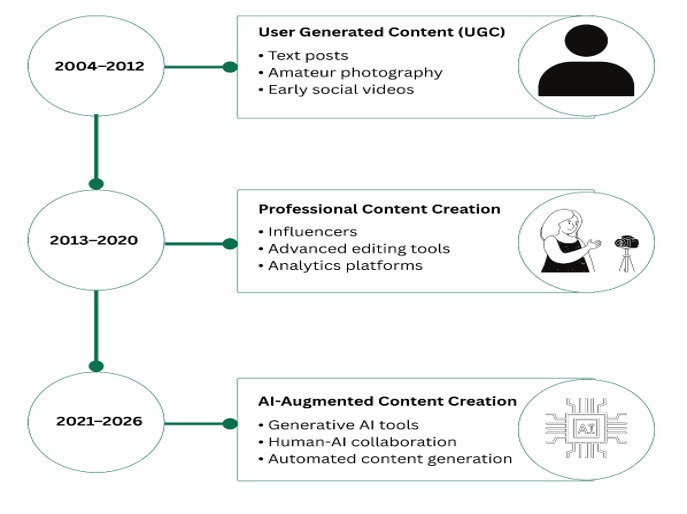
Figure 1. Evolution of Social Content Creation
3.2. Generative AI: Capabilities and Limitations
Generative AI are a category of deep learning models that can generate new content similar to the distributions in training data. The main architectures are transformer-based LLM, such as GPT-4, Claude, and Gemini; diffusion model for image generation, such as Stable Diffusion and DALL-E; and multimodal systems with a combination of different capabilities. Current GenAI systems have several capabilities that are relevant to social content creation, including: high speed text generation across diverse genres and tones; image and video synthesis from text prompts; personalization to user preferences or demographic segments; cross-modal translation; and style transfer and adaptation. But there are still substantial shortcomings. One of LLMs' most persistent issues is the production of factually incorrect information with a high level of authority, which is known as hallucination. Models tend to be culturally and linguistically biased, resulting in poor performance in non-English or non-Western contexts. Moreover, current systems do not understand, but are like what has been called a “stochastic parrot” that probabilistically recombines training patterns without understanding.
3.3. From Discriminative to Generative AI in Social Media
Over the last 10 years, the use of artificial intelligence in social media has changed dramatically. The initial applications of AI were mostly discriminative, in which systems were developed to classify, suggest, and filter existing content, derived from patterns learned. This paradigm was exemplified by recommendation algorithms, spam filters, and content moderation systems, which were all bound to the pre-existing content corpora. Generative AI is not just that. Generative systems produce new forms and content that were not analysed or selected, but emerged from the system. The transition from recommendation to generation raises new challenges to existing ideas about identity, authorship, and creative work. The difference has significant implications for the governance of social media: discriminative systems determine what people see, generative systems create what people see.
4. Key Technological Developments
Current capabilities have been made possible through several technological trends. With a transformer architecture of Vaswani et al. (2017) as the basis, large language models were created that are capable of producing coherent, contextually relevant text. As the model parameters and training data were scaled up over time, models such as GPT-4, Claude, and Gemini emerged, showcasing advanced language capabilities.
Another key development is the multimodal integration. Modern systems can handle and create in various modalities, facilitating more natural interactions between humans and AI and more seamless integration into social media workflows (Wang et al., 2026). The detection technologies have also evolved; for example, models such as DeBERTaV3 have been able to achieve 97.12% accuracy on test sets to distinguish between machine-generated and human-generated text (Sweidan et al., 2026).
4.1. Current Adoption Patterns
AI tools have become more than just productivity boosters; they've become an integral part of the creator economy. B2B platforms such as Meta have developed AI extensions such as AI Studio, enabling creators to develop AI tools that can interact with their followers in a tone and style representative of their own personal brand (Muñoz & Pericàs Riera, 2025). Such advancements pave the way for a future where humans and AI are no longer two distinct entities in content production.
4.2. Theoretical Lens: Human-AI Interaction in Creative Domains
To comprehend the influence of GenAI on social content, it is essential to use theoretical models that consider the collaboration between humans and machines in the field of creativity. This paper adopts three related viewpoints. Cooperative Creativity Theory suggests that creative products can be achieved through an iterative process of collaboration between human and artificial agents, where each partner brings unique strengths to the table, such as intentionality and emotional intelligence from humans and scale, speed, and pattern recognition from AI (Stief et al., 2026). From this perspective, the most useful content is not to be created by humans alone or to be completely automated, but collaborative. Media Richness Theory (Daft & Lengel, 1986) provides an explanation for platform selection when there are ambiguity and uncertainty in information. With GenAI allowing for quick adaptation of content across the richness spectrum from text posts to videos it could potentially reshape the platform-affordance relationship, and facilitate new forms of cross-platform communication (Aldous et al., 2026). The agenda-Setting Theory (McCombs & Shaw, 1993) has been adapted to the algorithmic environment, positing that the algorithmic system more and more determines what issues and perspectives are given attention. An automated agenda-setter (Jareh, 2025) can be a potential problem when using GenAI to generate content for engagement: it might be systematically reinforcing some topics and downplaying others.
4.3. Taxonomy of Human-AI Collaboration in Social Content
To understand the implications of generative AI on social content, there has to be precise conceptual distinction. Based on the Muñoz & Pericàs Riera, (2025) framework, we recognize four modes of human-AI collaboration on a continuum of autonomy and transparency. The most widely used and least controversial form is the one that is also created by humans with the help of AI. Creators continue to own the content while using AI to assist with certain tasks that create ideas, enhance language, and optimize for engagement. Based on the comparative study between human and AI-generated corporate social media posts, the FIIT (Fluency-Interactivity-Information-Tone) model is created to help grasp the impact of AI on content performance in the context of human guidance (Huang & Zhou, 2025).
AI bots deployed in platforms run with some level of human supervision. Meta's AI Studio is a good example of this, where creators can deploy AI agents that communicate with followers via the creator's voice and preferences. These systems work seamlessly, with answers that appear as AI-generated, but present the paradox of authenticity in mediated interactions (Dsouza, 2025). Human controlled AI avatars are virtual versions of real-life humans and are enhanced by AI technology to provide better appearance, behavior, or capabilities. These avatars are not independent, but rather are extensions of the human body, and they work transparently and in the interest of their human hosts (Muñoz & Pericàs Riera, 2025). The most advanced and worrisome type is autonomous AI agents. These systems are autonomous, generating their own content, targeting their audiences and making decisions with very little human input. AI-generated influencer’s synthetic characters with realistic appearances and personalities exemplify this category. However, the legal and ethical implications of these agents are not clearly understood, and there are questions about whether they have the right to own the content created by others and whether they should disclose their role (Wong et al., 2024).
Table 1. Taxonomy of Human-AI Collaboration Modes in Social Content Creation
| Mode | Degree of Human Control | Transparency | Typical Applications | Example |
|---|---|---|---|---|
| AI-Assisted Human Creation | Full | Transparent | Ideation, editing, optimization | Using ChatGPT for script drafting |
| Platform-Deployed AI Bots | Moderate | Typically Transparent | Automated engagement, response | Meta AI Studio bots |
| Human-Controlled AI Avatars | Substantial | Variable | Brand representation, customer service | Customizable digital personas |
| Autonomous AI Agents | Minimal | Often Covert | Full content pipelines, influencer accounts | AI-generated influencers |
Synthesized from Muñoz & Pericàs Riera (2025)
5. Opportunities: GenAI as Social Content Enabler
5.1. Efficiency and Scale
Efficiency and Scale One of the most obvious benefits of GenAI is the ability to generate content more efficiently. For traditional content creation, a single professional social media post may take ideation, drafting, creating visual assets, copy editing, platform-specific formatting and performance analysis. This pipeline can be reduced from hours to minutes with the help of GenAI tools. Efficiency claims supported by empirical evidence. Aldous et al. (2026) conducted a study on 892 people who were asked to choose between AI-generated and HCC posts and found that AI generated posts were "preferred by users, delivered stronger calls to action, and elicited more user engagement than HCC, especially on Facebook". Most importantly, GPT-4 proved to have the capability to "adapt content to platform-specific requirements while maintaining high perceived quality" (Aldous et al., 2026). The results are echoed in industry adoption. Using GenAI to create content calendars, initial drafts, caption ideas, and analyze performance has become a more common occurrence for social media marketing professionals (Vu, 2025). A.I. might be more useful in providing "backend support and maybe some tool enhancement" than in creating contentDownload PDF out front (Tiwari, et al, 2023).
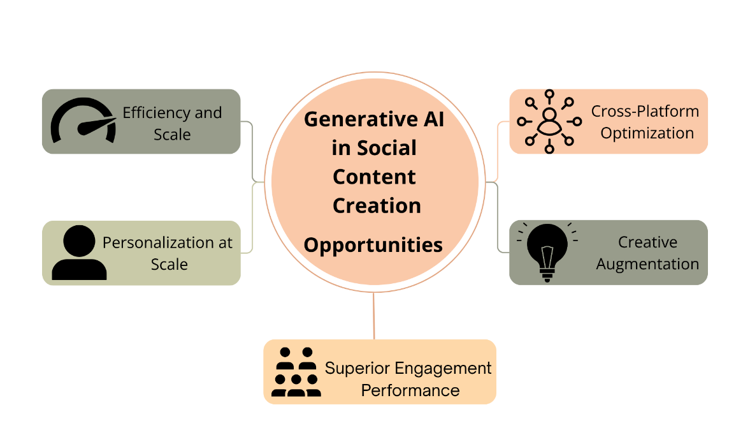
Figure 2. Opportunities of Generative AI in Social Content
5.2. Superior Engagement Performance
One of the most notable discoveries in the last few years is that generative AI can generate engaging content that clearly outperforms human-created content across engagement metrics. Huang & Zhou (2025) did three experiments involving AI-generated social media posts vs. human-written originals and vs. professionally-written alternatives.
In Study 1, the authors took 100 tweets from the top 500 companies in the world, and fed them to GPT-4 to produce additional viral versions of the tweets. Through comparative content analysis, significant systematic differences were identified: The posts created with AI were more fluent, presented more strategic interactivity cues, packed more information and were toned more optimally. These results were formalized as the FIIT model by the authors.
Study 2 validated the preference for AI-generated posts over original posts through an experiment. Study 3 showed that even experienced public relations professionals, with FIIT model instruction and monetary rewards, could not outperform AI. The results cast doubt on the uniqueness of the human creative act in social media, and lead them to ask questions of the engagement metrics.
5.3. Personalization at Scale
GenAI opens the way to a paradigm change from audience-based to individual-based personalization of content. Traditional social marketing divides the audience demographically or behavioristically and creates different variations according to each segment. In contrast, GenAI systems can potentially produce unique content for each user based on their interaction history, stated preferences, and emotional state as inferred from their interactions. This can be illustrated by the "omnimedia" model of knowledge dissemination by AIGC, proposed by Li (2025). Their approach combines "user portraits and sentiment analysis" to tailor the content, images, and audio to suit user preferences and the specific demands of various platforms, thereby ensuring the content aligns with user expectations and is suitable for each platform (Chen et al., 2025). The system is constantly updated using "user behavior logs, interaction metrics, and sentiment signals", allowing for real-time content optimization (Chen et al., 2025). This functionality has huge ramifications for user interaction. Content aligned with personal interests and moods leads to higher click-through rates, time spent, and conversion likelihood. But, as mentioned in the personalization also can lead to filter bubbles and manipulation.
5.4. Cross-Platform Optimization
Each social platform has its own unique content norms, audience preferences, and algorithmic rewards. Material that is tailored to LinkedIn's professional dialogue does not work well with TikTok's entertainment-centric platform, and the other way around is true, as well. Automated content adaptation is a solution provided by GenAI. GPT-4 was able to personalize content across Facebook, Instagram, and X, with ACC outperforming HCC across each platform.
5.5. Creative Augmentation
In addition to its efficiency benefits, GenAI has the potential to augment rather than replace creative output. Stief et al. (2026) discovered that the main utilization areas for GenAI by human creators are "ideation" and "the varying dynamics in the creation process, where the role of human creators shifts from an executing force to verifying and controlling the actual media production by GenAI". This is a specialization of work in which different aspects of a task are performed by different people. AI can produce a large number of options in a short time, exploring a larger "possibility space" than humans would manually be able to explore. Then, humans use judgment to choose great directions, tweak outputs and make sure they are aligned with strategic goals and brand voice. As one of the interviewees in Stief et al. (2026) explains, "AI provides 80% of the way, but the remaining 20%, which is what makes it really good, is still human touch".
Table 2. Comparative Advantages in Human-AI Content Creation
| Dimension | Human Creators | Generative AI | Optimal Collaboration |
|---|---|---|---|
| Speed | Slow for novel content | Near-instantaneous | AI generates drafts; humans refine |
| Originality | High potential for genuine novelty | Pattern recombination | Humans direct; AI explores variations |
| Emotional resonance | High (lived experience) | Low (simulated) | Humans provide authentic emotion; AI amplifies |
| Cultural context | Deep, implicit understanding | Surface patterns, biases | Humans validate appropriateness |
| Consistency | Variable | High | AI maintains quality floor |
| Personalization at scale | Impractical | Native capability | AI personalizes; humans set parameters |
| Strategic alignment | Strong | Weak without guidance | Humans define goals; AI executes |
6. Challenges and Risks
6.1. Authenticity Crisis and Trust Erosion
All this has led to an "authenticity crisis," as industry observers put it, of AI-generated content. “It's this weird and confusing period of time where you're seeing something with a high production value and you're thinking that somebody really smart thought about this, and now that's not the case any longer,” said Dan Murphy, SVP of Marketing at Liquid Death. The issue is that GenAI has removed the quality check from the hands of human beings and it is becoming increasingly hard to tell if a piece of content is created by humans or by AI. This confusion is a danger to the social media's integrity as a place for a genuine human interaction. Studies indicate that the acceptability of AI tools in media is accompanied by prevailing scepticism regarding the reliability of AI, particularly concerns over transparency of the algorithms and the risk of manipulation (Jareh, 2025).
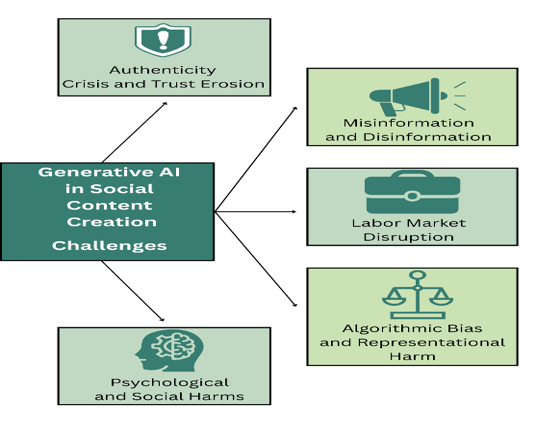
Figure 3. Challenges and Risks of Generative AI in Social Content
If users can't rely on the fact that content is truly authentic, then they might turn to other sources that can be trusted, or they may even leave social media. Responses from industry are beginning and are not yet cohesive. Some brands are transparently marking AI-generated content, but it's not consistent. Others are seeking out differentiation by leveraging “content that feels real and intentional,” says Duolingo CMO Manu Orssaud, who foresees “originality and personality will matter more than ever” as audiences get an “overdose of automated content” (Tiwari, 2023).
Generative AI's ability to create human-like content on a large scale poses a risk to the authenticity it provides as part of the value proposition of social media. As Ma et al. (2023) notes, “There's a type of music that's immediately familiar: the music without any point of view, the music that hasn't got a reason for it. The listener hears it without being able to explain it.”
Recent studies have proved that AI disclosure leads to lower engagement. Seeger et al. (2026) discovered that presenting AI-generated or AI-enhanced content caused a decrease in affective engagement and behavioral engagement compared to human-generated content. This was especially true for emotional content, which is the type of content that usually leads to the highest engagement rates on social media (Table 3).
Transparency gaps compound a challenge to authenticity. When AI-generated content works without detection synthetic personas or machine-generated messages can run without the knowledge of the audiences they may interact with, fooling them into thinking they are communicating with real humans. This intentional or incidental misrepresentation undermines the trust needed for a constructive social exchange (Ma et al., 2023) (Table 3).
Table 3. Impact of AI Disclosure on User Engagement Dimensions
|
Content Type |
Human-Created (Baseline) |
AI-Enhanced |
AI-Generated |
|
Affective Engagement (Emotional Content) |
High |
Medium-Low |
Low |
|
Affective Engagement (Rational Content) |
Medium |
Medium |
Low-Medium |
|
Behavioral Engagement (Likes/Share) |
High |
Medium |
Low |
|
Trust in Source |
High |
Medium |
Low |
6.2. Misinformation and Disinformation Amplification
Amplification with GenAI's ability to generate large volumes of realistic fake content, information integrity is facing an existential threat. While misinformation is typically created by people, AI can generate disinformation automatically and personalize it to maximize its effectiveness. The issue is exacerbated by the fact that AI-generated content often outperforms human-written content in terms of engagement. Should AI-generated content prove more effective than human-generated content at grabbing attention and encouraging sharing (Aldous et al., 2026), then misinformation could be shared more widely and quickly than factually accurate content (Figure 4).
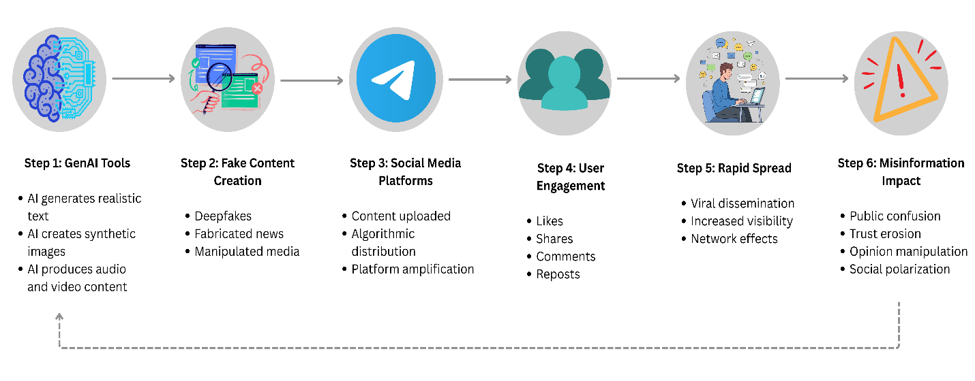
Figure 4. Misinformation Ecosystem Enabled by Generative AI
This dynamic flips the odds-on truth over falsehood and what Vosoughi et al. (2018) called the "amplification asymmetry" (Jareh, 2025). The efforts to detect continue to progress but with a lag. A multimodal fake news detection system was proposed by Chen et al. (2026) with accuracy of 99.72% on the Twitter dataset, 96.63% on Weibo dataset and 87.72% on GossipCop dataset. Although impressive, these results are based on the laboratory settings, and many other challenges exist in the real world such as concept drift (changing generations of techniques), cross-lingual transfer, and adversarial adaptation (systems learning to outsmart detectors).
6.3. Algorithmic Bias and Representational Harm
Large Language Models (LLMs) carry over and amplify biases from training data. These biases can be manifested as representational harms when used in the creation of content or content curation, such as misrepresentation, exclusion or stereotyping of certain groups. Barrie & Cerina (2026) compared LLM-generated “synthetic personas” with human survey respondents and found that LLM personas had significantly lower attitude constraint, that is, they are belief systems that are more coherent and less context-dependent than human beliefs. This over-coherence may be useful for certain applications, but is problematic for others because of its impact on the representation of human diversity and/or the potential for systematic mischaracterization of minority perspectives. Another worry is political bias. Content in selected curations is found to be systematically skewed to be written by left-leaning authors, even though left-leaning authors are not the majority of the pool of content authors (Pagan et al., 2026). This bias is maintained across the different prompting styles, indicating that it is not accidental.
6.4. Labor Market Disruption
GenAI is having a major impact on the labor market for the creative professions most impacted, such as writers, graphic designers, video editors, and social media managers. Some jobs are being enhanced instead of eliminated, but the trend is towards fewer routine creative jobs. With the growing number of AI-related job postings, proficiency in AI is now expected. The Aleessawi, & Alzubi, (2024) study reveals that a typical social media content role now demands candidates to "draft, edit, summarize, caption, and organize content using AI tools. Another job announcement is looking for a “Professional Content Creator” who has “experience using AI tools such as ChatGPT, Claude, or other AI assistants” (Seneadza et al., 2025). The repercussions for the creative labor markets are still not clear. Economic theory predicts that productivity-increasing technologies will usually lead to a net increase in jobs in those industries which are affected as costs fall and the demand rises (the Jevons paradox). But the scale and pace at which GenAI's capabilities are improving could be greater than what has been historically seen and adjust to, causing ongoing dislocation.
6.5. Psychological and Social Harms
In addition to the systemic issues, GenAI-generated social content also inflicts individual and collective psychological damage. Although algorithmic personalization can help with engagement, it can also lead to social comparison, body image distortion, doom scrolling and more mental health issues. AI systems optimized for attention bring to the forefront emotionally charged content, irrespective of its effect on peoples' wellbeing (Jareh, 2025).
7. The Future Trajectory: 2026 and Beyond
7.1. Predicted Trends in Social Content
Industry experts are predicting a number of changes for 2026 and beyond. First, AI will go under the hood, as infrastructure instead of as a feature. GenAI will be integrated into content creation tools, making it easier for users to adopt but less noticeable that AI is in use. Secondly, there will be a greater emphasis on platform differentiation, where brands also look for authenticity cues to stand out from AI-generated content. Kong et al. (2018) anticipates a shift back towards longer-form storytelling and brands with own able, distinctive voices to counter automated content. “This whole unhinged social media manager thing, it's really overplayed; it's going to fizzle out and create a white space for a new sort of persona”. Thirdly, the hybrid human-AI content model will prevail. Creators are already dabbling in AI content creation, with AI generating ideas and humans providing oversight, verification, and refinement, as reported by Stief et al. (2026).
7.2. The Human-AI Co-Creation Framework (HACC)
Drawing on the opportunities and challenges outlined above, this paper proposes the Human-AI Co-Creation Framework (HACC) to facilitate future social content creation. Four phases of work are defined, each having a different ratio of humans to AI (Figure 5).
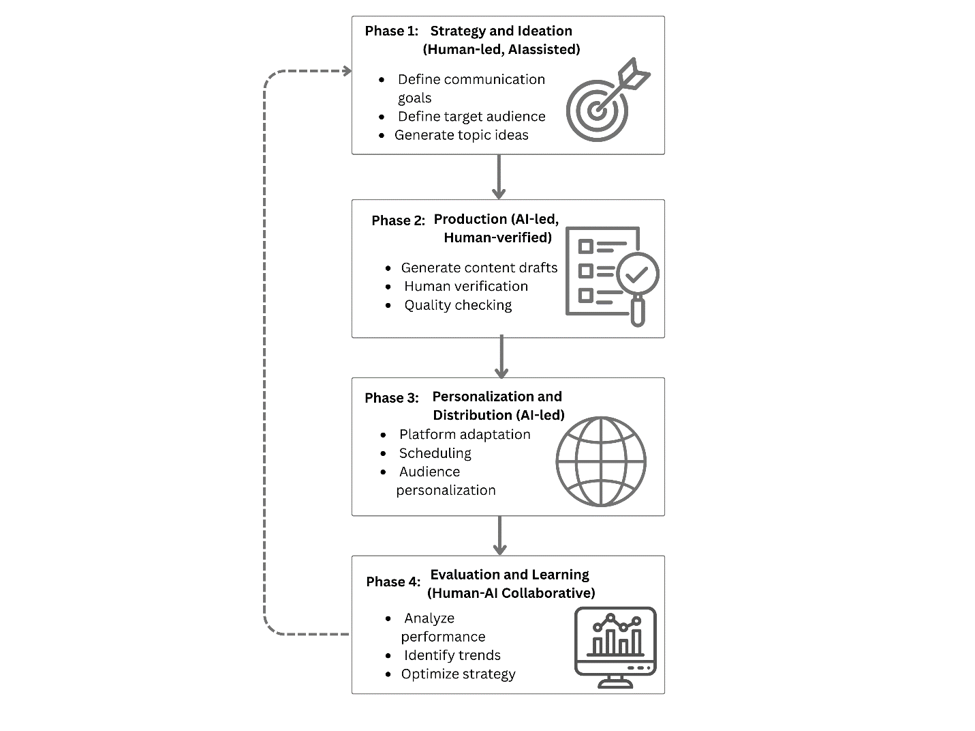
Figure 5. Human-AI Co-Creation Framework (HACC)
Phase 1: Strategy and Ideation (Human-led, AI-assisted): Humans set the communications goals and the parameters of the communication voice, target groups and ethical limits. The AI can create draft content ideas and clusters of topics along with creative directions that can be reviewed by humans (Habib et al., 2013; Maier et al., 2026).
Phase 2: Production (AI-led, Human-verified): AI creates content variations at scale to the parameters of Phase 1, which is then verified by humans. They're then checked by a human for mistakes, suitability, brand consistency, and emotional appeal, with the less successful ones discarded or retuned (Tie et al., 2026).
Phase 3: Personalization and Distribution (AI-led): AI adapts approved content for platform-specific requirements, schedules posts based on optimal timing models, and personalizes variants for audience segments. Human supervision is dedicated to exception rather than routine work (Habib et al., 2013; Ahn & Kim, 2025).
Phase 4: Evaluation and Learning (Human-AI collaborative): AI collates performance data, looks for trends and makes suggestions for optimization. The findings are then interpreted by humans and decisions are made on what to include and what not to include in the strategic context (Lai et al., 2021).
The HACC framework points to the importance of organizational processes, as well as technical capability, to enable appropriate human oversight for effective co-creation. Importantly, the framework also has feedback mechanisms that allow for continuous improvement and the accountability of humans in relation to content outcome.
7.3. Research Priorities
As the capabilities of GenAI continue to grow, and the responses of social platforms continue to evolve rapidly, this has caused a need for immediate research.
Firstly, longitudinal research on user attitudes is required to determine whether they grow more skeptical or become more accustomed to AI-generated content over time. Cross-cultural comparative research is especially essential due to the western-centric focus of most existing research.
Second, there is a need for proper assessment of the effectiveness of transparency measures such as labelling, watermarking, tracing the origin of materials. Are AI content labels noticed by users? Do labels influence trust, engagement, or sharing? Which type of labels work best?
Third, processes of organizational adoption should be studied. What are social media teams doing to change their processes, reskill or upskill employees, and create governance for the use of AI tools? What are the reasons for successful or unsuccessful adoption?
Fourth, there is a need to critically examine the political economy of AI-generated content. How does the quality of content change with the use of GenAI, and do the savings in production outweigh the resulting loss in quality? Who are the beneficiaries of the economy in a platform? The platforms, creators or users? What market structures are created?
8. Limitations
This review has several limitations. Firstly, empirical results are likely to lose validity over time in the face of rapid technology change. Some models currently available at the time of publication are already being replaced. Second, there is still limited information from industry about the use of AI and its effects, much of which is proprietary, and unavailable to academic researchers. Third, some development may go on that we do not examine in other contexts, particularly those in the English language.
9. Conclusion
The future of generative AI in social content ecosystems is neither about a complete ban nor about indiscriminate use, but about conscious and purposeful collaboration between humans and AI, properly established in content strategies, production processes, distribution systems and evaluation processes. In practice this entails practitioners investing in AI literacy, setting up clear governance, ensuring that any decisions taken are human-in-the-loop, and maintaining the inescapable human touch, while the policy-maker should focus on international harmonization of regulation, funding detection and provenance technologies, workforce transition, and transparency without overloading compliance. Meanwhile, researchers have pressing questions that need to be answered regarding long-term user experiences, effective collaboration structures, and the question of keeping pace with the development of new generation techniques, which will influence academic discussion and impact social interaction as a whole. Generative AI is not to end social content; it will mark the beginning of its deep transformation and those who leverage it, while protecting the authentic human connections at the core of social media, will be the ones to benefit; after all, this technology is a tool and a partner, not a replacement, for our digital humanity as a collective.
10. References
- Ahn, J., & Kim, M. (2025). Autonomous AI Agents for Multi-Platform Social Media Marketing: A Simultaneous Deployment Study. Electronics, 14(21), 4161. https://doi.org/10.3390/electronics14214161
- Aldous, K., Salminen, J., Farooq, A., Jung, S. G., & Jansen, B. (2026). Understanding user engagement with cross-platform social media content created by humans versus AI: an evaluation of ChatGPT in content marketing. ACM Transactions on the Web. https://doi.org/10.1145/375601
- Aleessawi, N. A. K., & Alzubi, S. F. (2024). The implications of Artificial Intelligence (AI) on the quality of media content. Studies in Media and Communication, 12(4), 41-51. https://doi.org/10.11114/smc.v12i4.7058
- Barrie, C., & Cerina, R. (2026). Synthetic personas distort the structure of human belief systems. https://doi.org/10.31235/osf.io/n7fq8_v1
- Chen, J., Li, Y., Ng, K. C., Wang, H., & Zhang, L. J. (2026, March). Toward Multimodal Fake News Detection by Multi-perspective Rationale Generation and Verification. In Proceedings of the AAAI Conference on Artificial Intelligence, 40(1), 66-74.
- Daft, R. L., & Lengel, R. H. (1986). Organizational information requirements, media richness and structural design. Management science, 32(5), 554-571. https://doi.org/10.1287/mnsc.32.5.554
- Dsouza, N. (2025). Comparative Analysis of Leading Generative AI Conversational Systems: ChatGPT, Grok AI, Gemini, and Meta AI. Authorea Preprints. https://doi.org/10.36227/techrxiv.175393328.84629021/v
- Habib, S., Morozov, V., Frontiere, N., Finkel, H., Pope, A., & Heitmann, K. (2013, November). HACC: Extreme scaling and performance across diverse architectures. In Proceedings of the International Conference on High Performance Computing, Networking, Storage and Analysis (pp. 1-10). https://doi.org/10.1145/2503210.2504566
- Huang, J., & Zhou, A. (2025). Generative AI outperforms humans in social media engagement: Evidence from GPT-4 and the FIIT model. Public Relations Review, 51(5), 102643. https://doi.org/10.1016/j.pubrev.2025.102643
- Jareh, A. (2025). An in-depth assessment of the acceptability and effectiveness of AI tools in identifying misinformation in media: literature review. Sage Open, 15(4), 21582440251381272. https://doi.org/10.1177/215824402513812
- Kong, Q., Mao, W., Chen, G., & Zeng, D. (2018). Exploring trends and patterns of popularity stage evolution in social media. IEEE Transactions on Systems, Man, and Cybernetics: Systems, 50(10), 3817-3827. https://doi.org/10.1109/TSMC.2018.2855806
- Lai, V., Chen, C., Liao, Q. V., Smith-Renner, A., & Tan, C. (2021). Towards a science of human-AI decision making: a survey of empirical studies. arXiv preprint arXiv:2112.11471. https://doi.org/10.48550/arXiv.2112.11471
- Li, X. (2025). Application and strategy of aigc in omnimedia knowledge dissemination under the background of digital empowerment. International Journal of Knowledge Management (IJKM), 21(1), 1-16. https://doi.org/10.4018/IJKM.385129
- Li, Y., Mandaloju, T., & Chen, H. (2025). Exploring Public Perceptions of Generative AI in Libraries: A Social Media Analysis of X Discussions. Proceedings of the Association for Information Science and Technology, 62(1), 406-416. https://doi.org/10.1002/pra2.1266
- Ma, Y., Liu, J., Yi, F., Cheng, Q., Huang, Y., Lu, W., & Liu, X. (2023). AI vs. Human--differentiation analysis of scientific content generation. arXiv preprint arXiv:2301.10416. https://doi.org/10.48550/arXiv.2301.10416
- Maier, S., Schneider, M., & Feuerriegel, S. (2026, April). Partnering with Generative AI: Experimental Evaluation of Model-Led and Human-Led Interaction in Human-AI Co-Creation. In Proceedings of the 2026 CHI Conference on Human Factors in Computing Systems (pp. 1-28). https://doi.org/10.1145/3772318.3791185
- McCombs, M. E., & Shaw, D. L. (1993). The evolution of agenda-setting research: Twenty-five years in the marketplace of ideas. Journal of Communication, 43(2), 58-67.
- Muñoz, K., & Pericàs Riera, M. (2025). The influence evolution: harnessing ai innovation while preserving human connection in social media. p-10. https://doi.org/10.60823/DGAP-25-42264-en
- Pagan, N., Barrie, C., Bail, C. A., & Törnberg, P. (2026). Polarization by Default: Auditing Recommendation Bias in LLM-Based Content Curation. arXiv preprint arXiv:2604.15937. https://doi.org/10.48550/arXiv.2604.15937
- Seeger, F., Wessel, M., & Lehrer, C. (2026). AI content labeling and user engagement on social media: The role of AI level, content type, and disclosure timing. Electronic Markets, 36(1), 31. https://doi.org/10.1007/s12525-026-00883-2
- Seneadza, J. S., Arku, Z., Kumi, D. K., Boateng, S. L., & Boateng, R. (2025). AI and Content Creation Research: A Snapshot of What We Know and What We Don't Know. In AI and the Creative Economy (pp. 36-62). Productivity Press.
- Stief, J., Kirchner-Krath, J., & Morschheuser, B. (2026). How is generative AI transforming content creation on social media?: An exploratory perspective on human-AI interaction processes, potentials and pitfalls. Proceedings of the 59th Hawaii International Conference on System Sciences, Honolulu, 76-85
- Sweidan, S., Farouk, N. A., Abouhawwash, M., Askar, S. S., & Taha, M. (2026). DeBERTa-based framework for detecting machine-generated content on social media: a comparative study. Journal of Big Data, 13, 10. https://doi.org/10.1186/s40537-025-01349-6
- Tie, G., Shi, J., Song, D., Huang, Y., Sheng, Z., Zhou, X., & Gao, J. (2026). Autoresearch AI: Towards ai-powered research automation for scientific discovery. arXiv preprint arXiv:2605.23204. https://doi.org/10.48550/arXiv.2605.23204
- Tiwari, A. (2023). Generative AI in digital content creation, curation and automation. International Journal of Research Science and Management, 10(12), 40-53. https://ijrsm.com/index.php/journal-ijrsm/article/view/827
- Vaswani, A., Shazeer, N., Parmar, N., Uszkoreit, J., Jones, L., Gomez, A. N., & Polosukhin, I. (2017). Attention is all you need. Advances in Neural Information Processing Systems, 30.
- Vosoughi, S., Roy, D., & Aral, S. (2018). The spread of true and false news online. Science, 359(6380), 1146-1151. https://doi.org/10.1126/science.aap9559
- Vu, T. P. T. (2025). The impacts of Gen AI in transforming social media marketing: a study of solopreneur social media operations. https://urn.fi/URN:NBN:fi:amk-2025052716979
- Wang, L., Li, X., Zhou, B., Zhang, Y., Yuan, J., & Hu, H. (2026). Multimodal fusion with LLM content via hierarchical progressive transformer for explainable fake news detection. Information Processing & Management, 63(5), 104700. https://doi.org/10.1016/j.ipm.2026.104700
- Wessel, M., Adam, M., Benlian, A., Majchrzak, A., & Thies, F. (2025). Generative AI and its transformative value for digital platforms. Journal of Management Information Systems, 42(2), 346-369. https://doi.org/10.1080/07421222.2025.2487315
- Wong, L. W., Tan, G. W. H., Ooi, K. B., Hew, J. J., & Dwivedi, Y. K. (2024). Generative artificial intelligence in the creator economy. Online Information Review, 48(7), 1515-1521. https://doi.org/10.1108/OIR-11-2024-694
- Zhou, X., & Zafarani, R. (2018). Fake news: A survey of research, detection methods, and opportunities. arXiv preprint arXiv:1812.00315, 2, 13. https://doi.org/10.1145/3395046